The problem: the soft base nobody sees
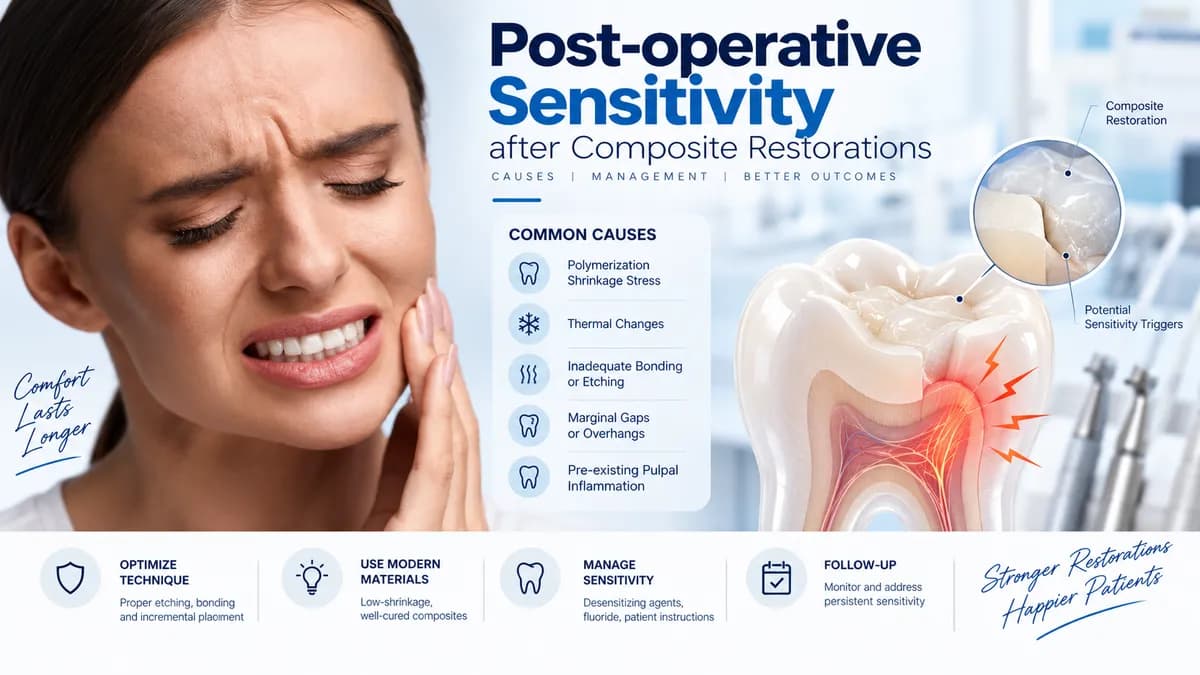
A bulk-fill composite placed 4 mm deep and cured with a light whose output has quietly halved is hard on top and soft at the base. Nothing looks wrong at the chair. The patient returns with sensitivity, or the restoration fails early, and the material takes the blame. The curing light is the one piece of equipment that touches every adhesive restoration in the clinic, and it is the one bought with the least attention to its specifications. This guide explains the numbers that matter, what modern composites demand of the light, and how the units we stock compare.
Understand: the numbers on the box
Irradiance and radiant exposure
Irradiance is the power the light delivers per unit area, in milliwatts per square centimetre. A composite does not cure on irradiance alone; it cures on the energy it receives, which is irradiance multiplied by time and is called radiant exposure, in joules per square centimetre. A light delivering 1,000 mW/cm² for 20 seconds gives 20 J/cm²; a 2,000 mW/cm² light for 10 seconds gives the same. Composite manufacturers state a cure time for a minimum irradiance; a weaker light needs proportionally longer, and a much weaker light may never reach the energy needed at depth.1
Distance and angle
Irradiance falls quickly as the tip moves away from the surface. In a deep proximal box the composite at the floor can be 6 to 8 mm from the tip. Laboratory studies show the hardness of bulk-fill composites drops with curing distance, which is why the tip should be as close and as perpendicular as the cavity allows, and why a deep box is often cured again through the buccal and lingual walls after the matrix comes off.3
Tip diameter
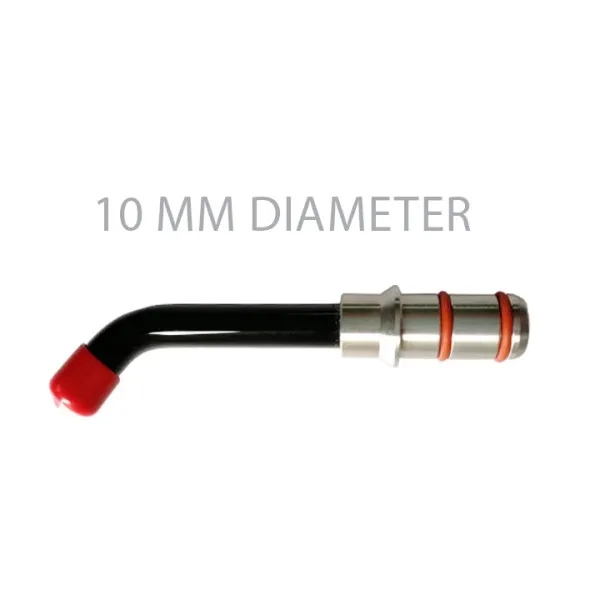
A wide tip covers a whole molar cavity in one position; a narrow tip cures the centre and leaves the margins under-exposed. A laboratory comparison of bulk-fill composites found a higher degree of conversion and greater depth of cure with a wide tip than with a narrow one.2
Wavelength
Most composites use camphorquinone as the photoinitiator and absorb blue light around 470 nm; every LED curing light emits there. Some bleach shades, adhesives and cements use additional initiators that absorb at shorter wavelengths, around 400 to 420 nm, and need a broad-spectrum light. The material's instructions state the range required.
Why bulk-fill raises the stakes
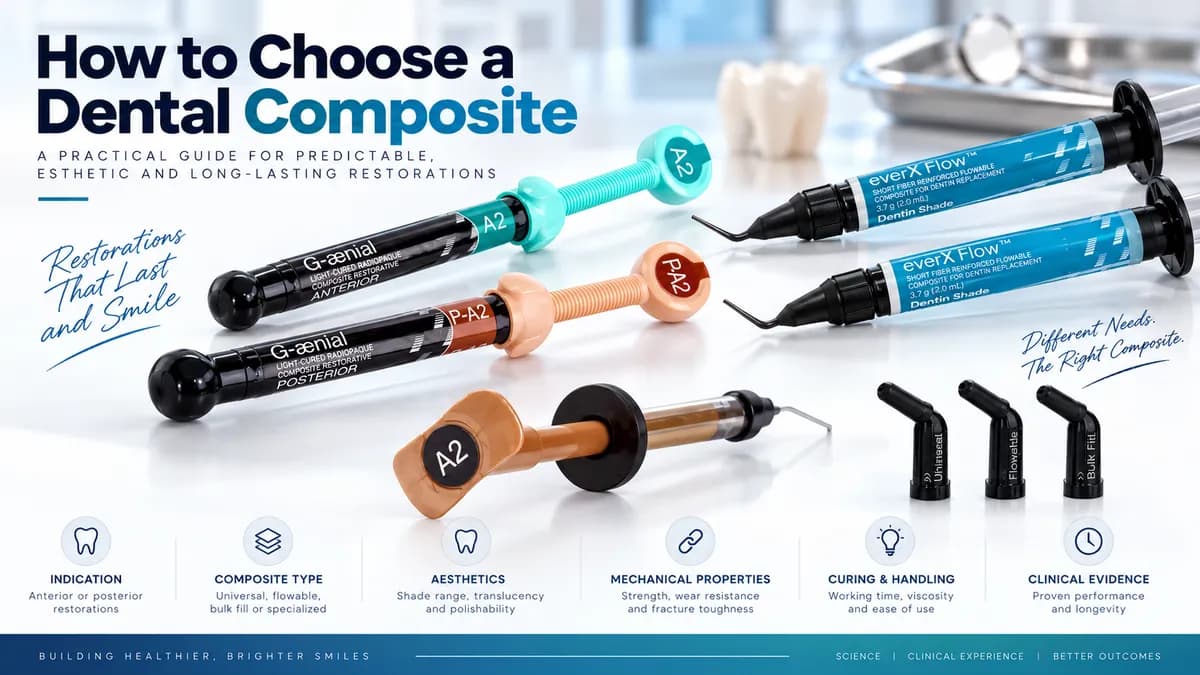
A bulk-fill composite is defined by a depth of cure of at least 4 mm. That claim is made for the manufacturer's stated light output and time. Placed in a single deep increment and cured with a light below that output, the base of the increment is under-cured, and there is no second increment to hide it. The light is part of the bulk-fill system.
Options: the lights we stock
| Unit | Type | Notable features (manufacturer) | Fits |
|---|
| Woodpecker i LED Plus | Cordless LED | High-irradiance short mode advertised as 1-second curing, standard and ramp modes, metal head, replaceable tip | Busy general practice wanting one light for everything |
| Ultradent VALO Grand | Cordless LED, broad spectrum | Large lens for wide coverage, multiple wavelength emitters, several power modes, accessory lenses | Clinics using bleach shades, cements and adhesives with varied initiators; large posterior cavities |
| Woodpecker LED.B and LED-H | Cordless LED | Standard, ramp and pulse modes; lower price | Second light for a hygiene room or a starting clinic |
| Apoza D-2000 | Cordless LED | Higher-output unit, sold without a meter | Practices wanting high output at a lower price than the reference brands |
| Wismed NANO LED | Cordless LED | Compact, budget | Backup unit |
Alongside the light: replacement tips and lenses, clear sleeves and shields for infection control, and a radiometer to check output, which we do not currently stock and recommend buying separately.
Compare: what to look at before the price
| Specification | What to look for | Why |
|---|
| Irradiance | A stated standard mode of roughly 1,000 mW/cm² or more; high modes higher | Covers manufacturer cure times for conventional and bulk-fill composites at realistic distances |
| Tip diameter and shape | Wide enough to cover a molar preparation; a turbo tip narrows the beam and raises irradiance at the cost of coverage | Coverage of margins in one position |
| Wavelength | Single-peak blue for camphorquinone materials; broad spectrum if your materials require it | Some adhesives, cements and bleach shades will not cure fully under single-peak lights |
| Modes | Standard, ramp or soft-start, high; short high-dose modes as an option | Soft start is used by some clinicians to reduce shrinkage stress |
| Battery and charging | A day's use per charge, spare battery available | A dying battery is the commonest cause of a silent output drop |
| Serviceability | Replaceable tip, lens and battery; local warranty | Tips get scratched and cloudy; replaceability keeps the output up |
| Infection control | Sleeves made for the model; smooth head with few crevices | Sleeving is routine; a good fit keeps the light loss small |
Choose the i LED Plus or a similar high-output single-peak light if your composites and adhesives are camphorquinone-based and you want one dependable unit. Choose the VALO Grand if you cure cements and bleach shades that need shorter wavelengths, or if wide coverage matters in your posterior work. Choose the LED.B, LED-H or NANO as a second light where a lower price matters more than modes.
Using the light well
- Check output with a radiometer regularly and log the reading; replace the tip when it is scratched or cloudy.
- Tip as close and as perpendicular to the composite as the cavity allows; do not rest it on the cusp and cure the box from a distance.
- Cure for the composite manufacturer's stated time at your light's output; when in doubt, cure longer, not shorter.
- Cure deep boxes again through the buccal and lingual walls after removing the matrix.
- Protect the eyes: use the shield or orange glasses; never look at the tip.
- Watch the heat: high-output modes warm the pulp; use them in short bursts with air cooling on deep preparations.
Recommended products
The lights, from the reference units to the budget second unit:
Buying advice
Compare the i LED Plus, the VALO Grand and the LED.B on irradiance, tip size and wavelength, then buy a spare battery and a box of clear sleeves with whichever you choose. Add a radiometer from any supplier and check the light on the first day so you have a baseline. If you buy a bulk-fill composite this year, buy the light that its instructions assume.