The problem: a motor that does not match the files
An endo motor is bought once and then drives every nickel-titanium file the clinic uses for years. It is often chosen by screen size or price, and the mismatch shows later: a reciprocating system the motor has no programme for, a head ratio it is not set for, torque entered by guesswork. This guide explains what an endomotor is and what its parts do, the types available, the features that decide the purchase, and how to match a motor to your file system.
Understand: how an endo motor works
What an endomotor is used for
An endomotor is a low-speed electric motor made for engine-driven root canal files. Unlike the micromotor on the dental unit, it holds the file at a set speed, limits the torque, and stops or reverses the file when the load reaches that limit. It shapes canals with rotary or reciprocating files, runs glide-path and retreatment files, and on combined units follows working length during shaping. Torque is one of the factors in instrument failure; auto-reverse releases a binding file before the load builds up to fracture.1
The parts of an endomotor
- Control unit or cordless body. Screen, programme memory and power; corded units add a console, a motor cable and usually a foot pedal.
- Micromotor. The electric motor that turns the head; several current units are brushless.
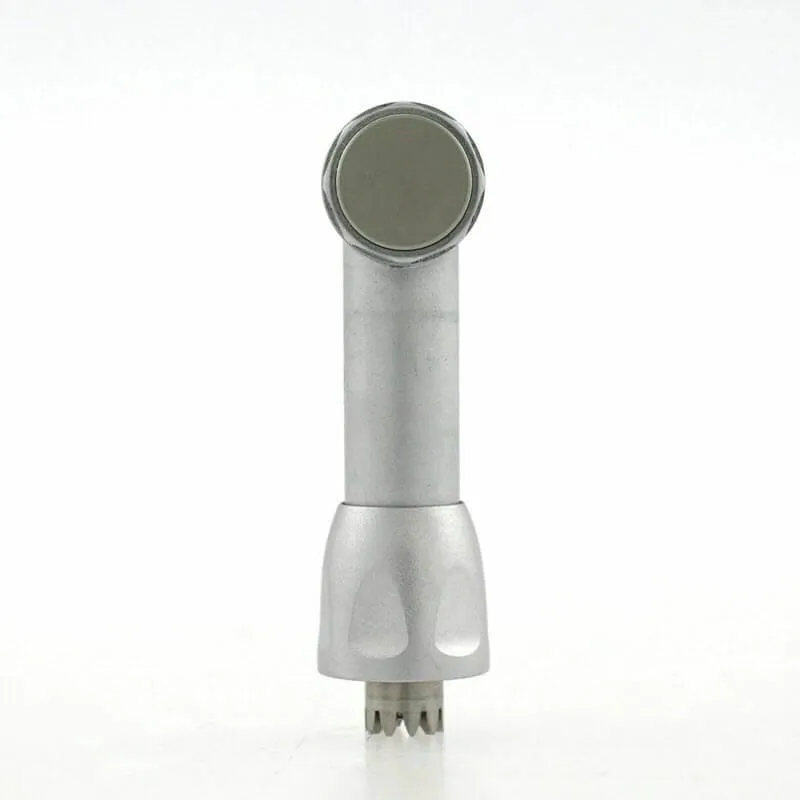
- Contra-angle head. The geared head that holds the file. Its reduction ratio, such as 6:1, 16:1 or 20:1, lowers motor speed to file speed and raises torque roughly in proportion, so the motor must be set to the head fitted. Head height and a head that rotates decide access to second molars.
- Controls and programmes. Speed, torque, direction and motion, stored as custom programmes or file-system presets.
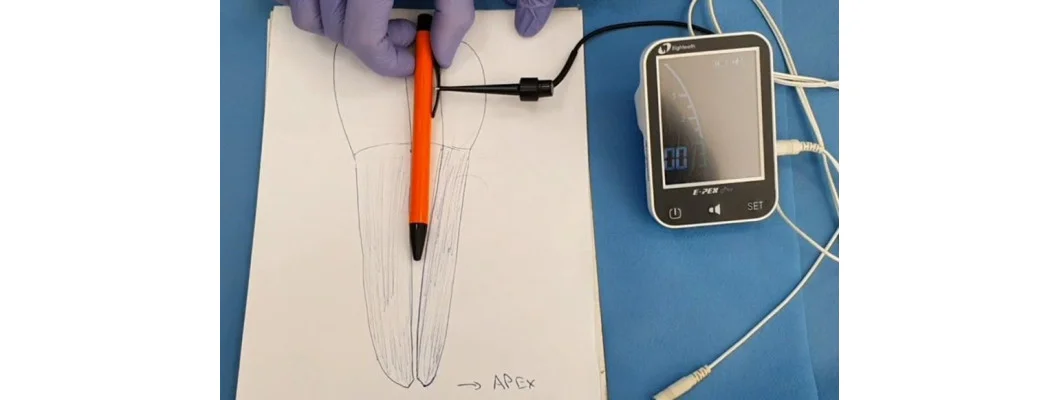
- Integrated apex locator. On combined units a lip clip and the file close the circuit, so the motor reads the file's position while it shapes.
Torque control, auto-reverse and calibration
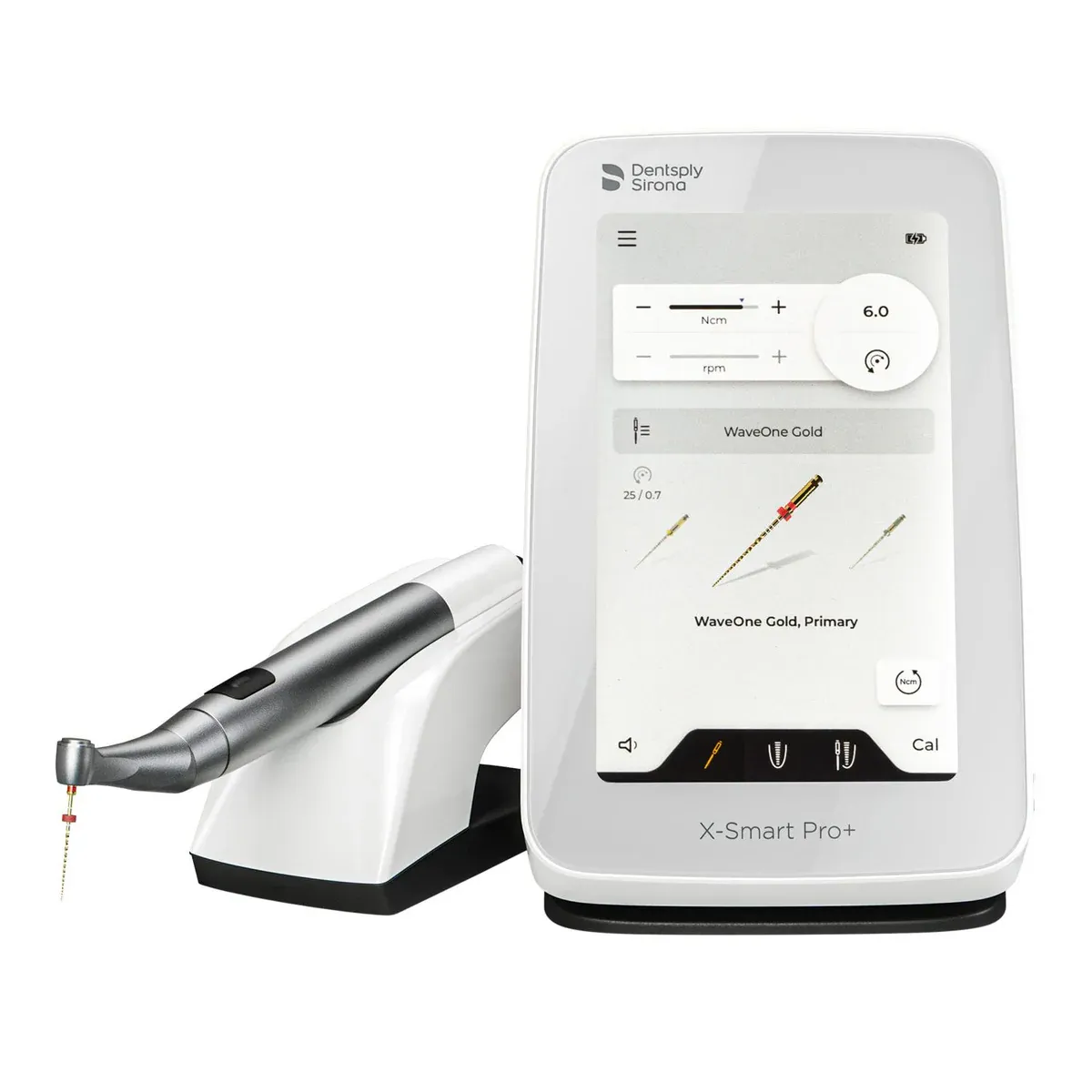
Torque is set in newton centimetres (Ncm), and the file maker prints a value for each file. At that load the motor stops and reverses, or on some units moves back and forth until the file frees, a mode makers call ATR or adaptive. Ranges differ: the X-Smart Pro+ is specified from 0.2 to 7.5 Ncm and 100 to 3,000 rpm, with a calibration function for precise torque setting.5 Calibration measures the friction of the fitted head, so a new, freshly lubricated or worn head does not change the torque the file receives.
Speed, motion and file-system presets
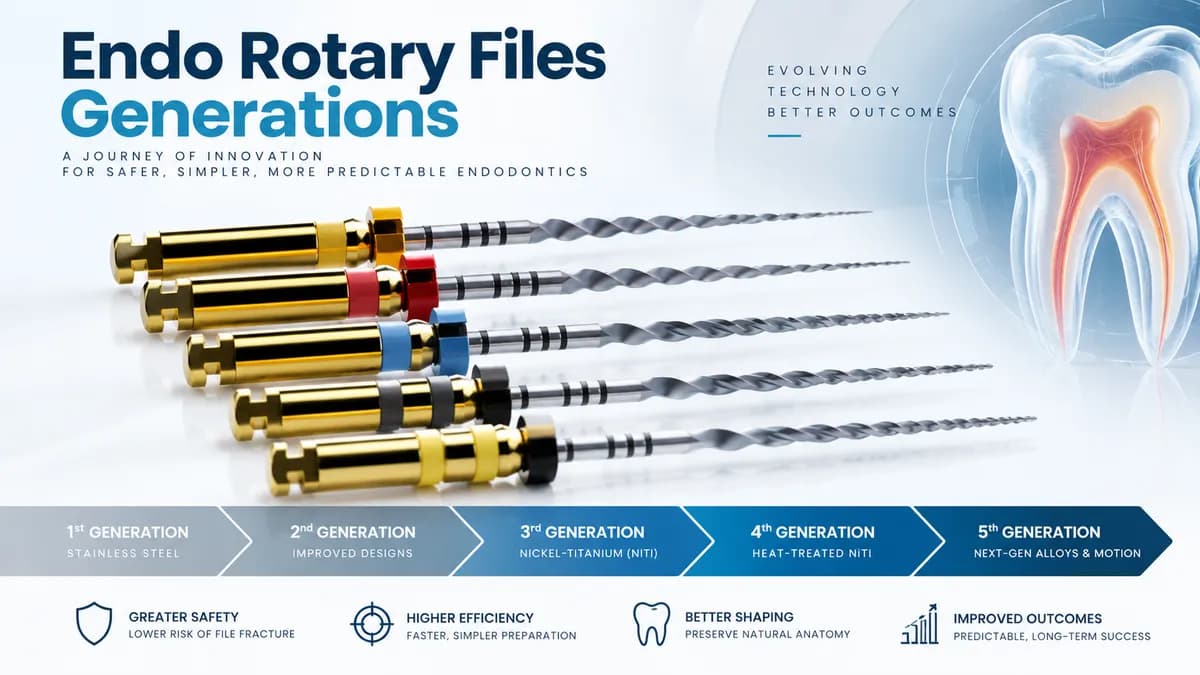
The file maker, not the motor maker, sets the numbers. Rotary files carry a speed and torque for each size; reciprocating files are designed around a pair of angles, and WaveOne Gold files, for example, are to be used on a motor with the approved WaveOne Gold settings.6 A preset library removes the typing for the systems it lists; custom programmes cover the rest if the motor lets you set angles as well. Set values are not exactly what the file receives: in a laboratory study none of three reciprocating motors reproduced its set angles and speeds faithfully.2 Where a file maker names motors for its reciprocating system, use one of them.
Rotary or reciprocation, in one paragraph
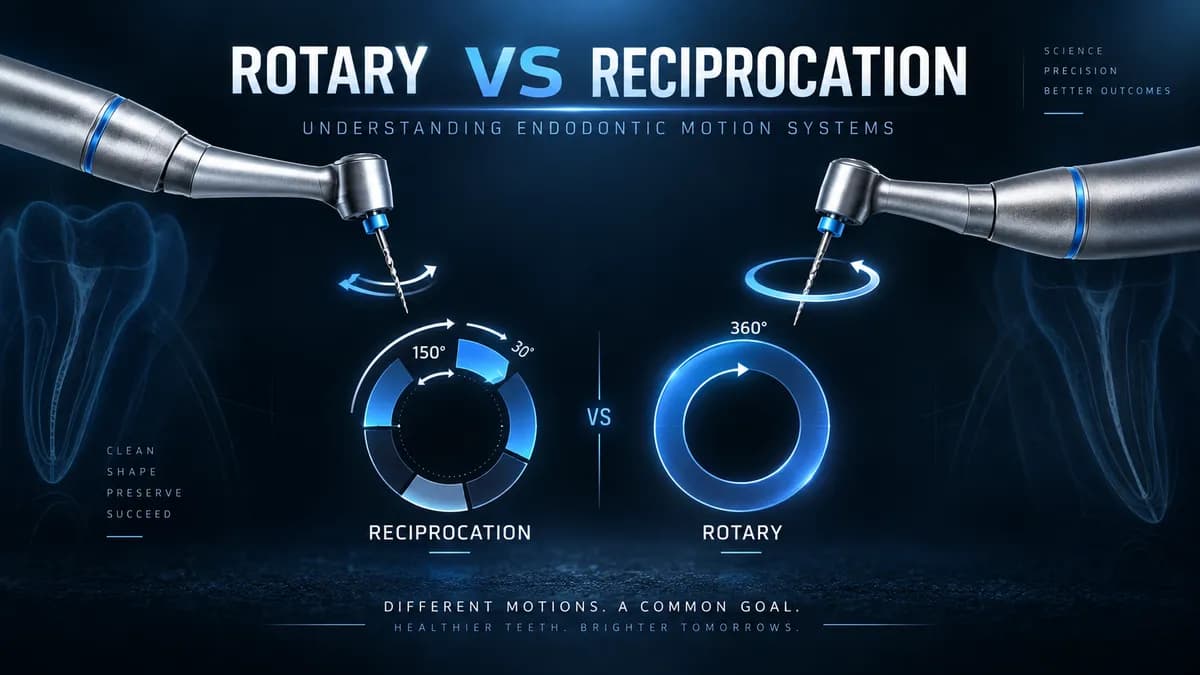
Continuous rotation suits most multi-file rotary sequences; reciprocation turns the file further in the cutting direction than in reverse, which limits torsional stress, and drives the single-file reciprocating systems. Neither removes the need for a glide path, and the file system decides the motion. Buy a motor with both motions if the clinic uses or may adopt a reciprocating system; our rotary versus reciprocation guide covers the clinical trade-offs.
Integrated apex locator
A combined unit shows the file's position while shaping and can slow, stop or reverse it at a point you choose. In extracted teeth, the auto-stop of two motors measuring continuously located the apical constriction as accurately as a stand-alone apex locator.3 In another laboratory study, readings through rotary files were less accurate than with hand files, with mean errors of about 0.42 mm against 0.25 mm.4 Take working length with a hand file first and let the motor guard it; our apex locator guide covers the rest.
Options: motor types and the units we stock
| Unit | Type | Notable features (manufacturer) | Fits |
|---|
| Dentsply Sirona X-Smart Pro+ | Corded, integrated apex locator | Rotary and reciprocating; 0.2 to 7.5 Ncm, 100 to 3,000 rpm; presets for WaveOne Gold, ProTaper Ultimate, TruNatomy and Reciproc Blue; LED mini head; calibration | Clinics using those file systems |
| Woodpecker Ai Motor | Cordless, integrated apex locator | Brushless; 0.4 to 5.0 Ncm, 100 to 2,500 rpm; rotary and reciprocating modes; adaptive torque reverse | Clinics using several rotary and reciprocating systems |
| Woodpecker Motopex | Cordless, integrated apex locator | Brushless; 6:1 head; 0.4 to 5.0 Ncm, 100 to 1,200 rpm; reciprocating and ATR modes | General practice wanting length control in one handpiece |
| COXO C-Smart Mini AP | Cordless, integrated apex locator | 0.6 to 3.9 Ncm, 150 to 600 rpm; 31 preset file systems; torque- and apex-based auto-reverse | Rotary systems within 600 rpm |
| Woodpecker Endopace and E-COM Plus | Cordless; connect to a compatible apex locator | Endopace: 100 to 1,500 rpm, 6:1 head, reciprocating and ATR modes. E-COM Plus: 0.6 to 5.0 Ncm, 100 to 1,000 rpm, reciprocation mode | Clinics that own a stand-alone apex locator |
| Saeshin E-Cube | Portable, battery or mains | 0.6 to 5.2 Ncm; heads from 1:1 to 20:1; 9 programmes; auto-reverse; reciprocating function | One motor for several head ratios |
| Saeshin Traus cordless endomotor | Cordless, rotary | 20:1 ratio, 4 Ncm, 600 rpm | Rotary sequences within those limits |
| EDS Endo-Express with SafeSider intro kit | Reciprocating handpiece, not a motor | Fits an E-type low-speed motor; supplied with SafeSider instruments | Reciprocation without an electric endo motor |
| Heads and spares | Replacement parts | Ai and E-COM Plus heads, Endopace handpiece, C-Smart 1:1 heads, Sirona 6:1 handpiece, 10:1 and 16:1 endo contra-angles, 41EP and 42EP rotary handpieces | Keeping a motor in use while a head is serviced |
The category also holds the COXO C-Smart-I Pilot and Pro, the Coltene CanalPro and the Meta Biomed Endo Smart, while the Ultra Smart and ENDO 1 are ultrasonic irrigant activators, not motors.
Compare: what to check before the price
| Criterion | What to look for | Why |
|---|
| Torque range and auto-reverse | Covers the lowest and highest torque printed for your files; auto-reverse in every rotary programme | Torque is a factor in file failure; auto-reverse stops the load building to fracture |
| File-system presets | Presets for your systems; editable custom programmes | The file maker sets speed, torque and angles |
| Motion | Rotation, plus reciprocation with adjustable angles if you use a reciprocating system | Reciprocating files are made for their approved settings |
| Reciprocation accuracy | A motor the file maker names for its reciprocating system | Real angles and speeds differ from set values |
| Integrated apex locator | Apical stop or reverse at a set point; a clear display | Auto-stop matched a stand-alone locator; hand-file readings are more accurate |
| Calibration | A calibration routine for the fitted head | Head friction changes the torque reaching the file |
| Head size and angle | A mini head that rotates; LED if offered | Access to second molars and in limited opening |
| Battery and spares | A day's battery or mains power; replacement heads available locally | A flat battery or a head away for repair stops treatment |
Choose the X-Smart Pro+ if you shape with the file systems in its library and want the maker's settings loaded. Choose a cordless motor with an integrated apex locator, such as the Ai Motor, Motopex or C-Smart Mini AP, if you use several file brands and want length control in one handpiece, checking that the speed range covers your files. Choose the Endopace or E-Cube if the clinic already owns a stand-alone locator, or the Traus unit for rotary sequences within 4 Ncm and 600 rpm.
Using the motor well
- Load the file's settings. Select the preset, or enter speed, torque and, for reciprocating files, angles from the file maker's instructions; check that the ratio on screen matches the head.
- Lubricate and calibrate. Lubricate the head as instructed and calibrate when a head is fitted or serviced.
- Glide path first. Open a reproducible path to working length with small hand files before the first engine-driven file.
- Light strokes, no pressure. When auto-reverse triggers, withdraw, clean the flutes, irrigate and recapitulate instead of pushing.
- Use the apex function as a guard. Remove excess irrigant from the pulp chamber, confirm length against a hand-file reading and a radiograph, and check the instructions for warnings about implanted cardiac devices.
- Irrigate safely. Keep the sodium hypochlorite needle loose and short of working length, and never force the plunger: extrusion past the apex causes severe pain, swelling and tissue damage.
- Infection control. Clean, lubricate and autoclave the contra-angle head after each patient; wipe the motor, cable and screen with an approved disinfectant under barrier film, and do not autoclave them unless the maker allows it.
- Retire files on schedule. A torque-limited motor protects a file; it does not make a fatigued one safe.
Recommended products
Motors with an integrated apex locator:
Buying advice
List your file systems and their speed, torque and reciprocation settings, and rule out any motor that cannot reach them. Then compare the X-Smart Pro+, the Ai Motor and the C-Smart Mini AP on presets, speed range, head size and apex function. Whichever you choose, check that a spare head is available, calibrate on the first day, and keep taking working length with a hand file.