The problem: an end point you cannot see
The root canal ends at an apical constriction you can neither see nor reliably feel, inside a foramen that often opens on the side of the root rather than at the tip on the radiograph. Work short and infected tissue stays in the apical canal; work long and irrigant, debris and filling material are pushed into the periapical tissues. A dental apex locator finds that end point electronically, and its reading is only as good as the conditions it is taken in. This guide covers how it works, what the display means, what disturbs it and the units we stock.
Understand: how an apex locator measures
The circuit and the methods
A lip hook on the oral mucosa acts as the reference electrode, and a clip holds the metal shank of a file in the canal.6 The unit measures the resistance or impedance of that circuit, which changes as the file tip reaches the tissue at the end of the canal. The earliest locators measured resistance to direct current; the next measured impedance at a single frequency and read inaccurately with irritants and electrolytes in the canal. Frequency-dependent units compare impedance at two frequencies: the Root ZX uses 400 Hz and 8 kHz and indicates the minor diameter when the quotient reaches 0.67. Later units measure at two to five frequencies and compare the result with stored data.3
What the generation number means
These steps are called the first to fourth generations. The labels describe the history of the method rather than a standard, and a review of the classification finds no clear technical distinction behind devices sold as fifth or sixth generation.3 Treat it as marketing; ask which method the unit uses and in which canal conditions it was tested.
What the reading means
Preparation aims to end as close as possible to the apical constriction, which normally lies 0.5 to 2 mm from the radiographic apex.2 The major foramen opens to the side of the anatomical apex in most roots, and the constriction lies on average about 0.5 mm inside it in younger patients and 0.8 mm in older ones.1 On many locators the 0.0 or APEX mark means the foramen, not the constriction. One manufacturer states that the marks between 0.0 and 2.0 are zones rather than millimetres, and that working length is the measured length minus 0.5 to 1 mm.6 Scales differ between makers, so read your unit's instructions.
Accuracy
A 2025 systematic review found working length acceptable in 87.0% to 92.1% of canals measured with an apex locator in randomised trials, against 74.0% to 83.1% with radiographs; in two trials radiographs overestimated length in 11% to 13% of cases against 1% to 3% with a locator.1 The review excluded open apices, resorption, perforations and fractures, the cases where readings become unreliable.1
What disturbs the reading
- Fluid bridging to the gingiva. Blood, saliva or irrigant running from the access cavity to the gingiva short-circuits the measurement.6
- Conductive irrigants. In laboratory studies sodium hypochlorite, being highly conductive, gave shorter readings; readings in 2% chlorhexidine were closer to the actual length.4
- A canal that is too dry. One manufacturer advises moistening it with saline or sodium hypochlorite when the reading will not progress.6
- Metal and caries. Contact with a metal crown or restoration, or caries on the adjacent surface, gives an early, OVER or unstable reading.6
- Leaks along the root. Perforations, root cracks and fractures, and lateral canals conduct current before the file reaches the apex.4, 6
- Wide apices. When the canal is as wide as the foramen, the reading comes out short.6
- File and hardware. A file too small for the canal, pulp tissue left behind, a worn clip or a damaged cord makes the reading unstable; stop measuring when the low-battery indicator flashes.6
Pacemakers and implanted cardiac devices
Woodpecker's manual advises against use in patients fitted with pacemakers or other electrical devices, and extends the warning to an operator who has one.6 However, a systematic review of five laboratory and two clinical studies concluded that apex locators can be used safely with cardiac implantable electronic devices when general precautions are followed, such as keeping electrical appliances 10 to 20 cm from a defibrillator and its leads. One clinical study recorded background noise or pauses in the implant, and the authors advise consulting the cardiologist for patients with defibrillators.5 If your unit's instructions contraindicate use, follow them and determine the length radiographically.
Motors with an integrated locator
An endo motor with a built-in locator reads the file position while shaping and can stop or reverse the file at a set point near the apex; some stand-alone locators connect to a compatible motor by cable to do the same.6 The reading is disturbed exactly as with a hand file, so take the length with a hand file first, confirm it radiographically, then set the reverse point short of the foramen.
Options: the apex locators and integrated motors we stock
| Unit | Type | Notable features (manufacturer) | Fits |
|---|
| NSK iPex II Set | Stand-alone locator | SmartLogic detection, LCD showing the file-tip position, AAA batteries, file clips and lip hooks supplied | General practice wanting a battery-powered unit |
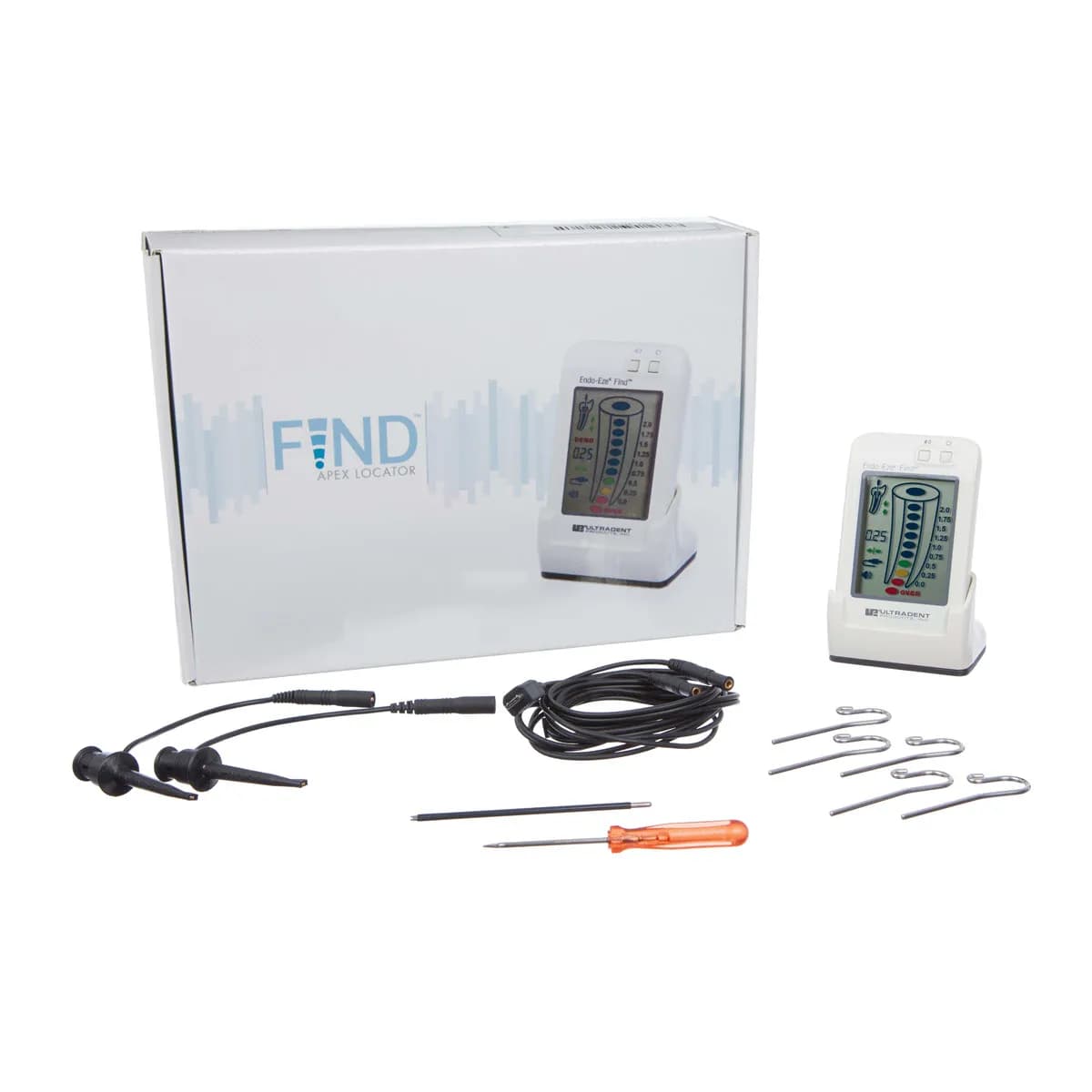
| Ultradent Endo-Eze Find kit | Stand-alone locator | Multi-frequency impedance, one AAA battery, touch probe, file clips and lip clips | A small unit with a touch probe |
| Woodpecker WOODPEX III and DPEX V5 | Stand-alone locators | WOODPEX III: multi-frequency impedance, automatic calibration, autoclavable file clip, lip hook and touch probe | A first or second locator |
| COXO C-ROOT I+ and C-ROOT I (III) | Stand-alone locators | C-ROOT I range: multi-frequency measurement, self-calibration, colour touch screen, adjustable apex alert position | Touch-screen users |
| Smarpex I-Root and Meta Biomed Rootor | Stand-alone locators | I-Root: replacement USB probe cord and probe sensor cord stocked separately | Spare cords on the shelf |
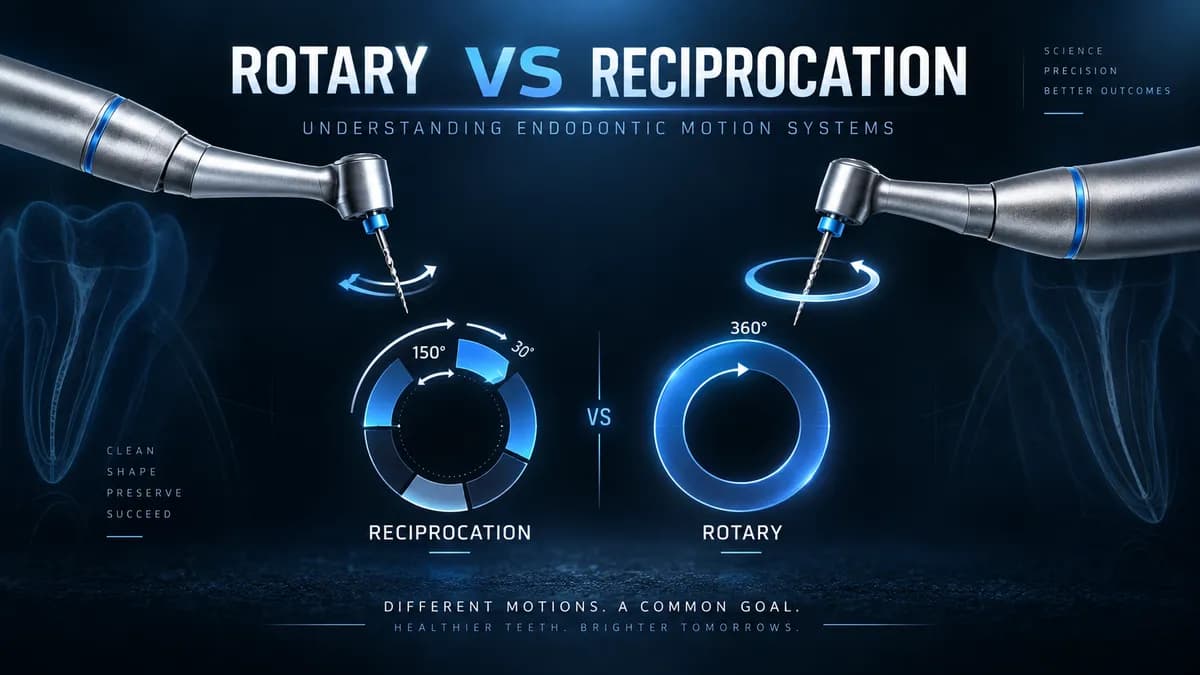
| Essential Dental Systems Endo-Express or Tango-Endo with NSK iPex II | Reciprocating handpiece with a locator | Handpieces fit E-type motors | Reciprocation on an existing motor |
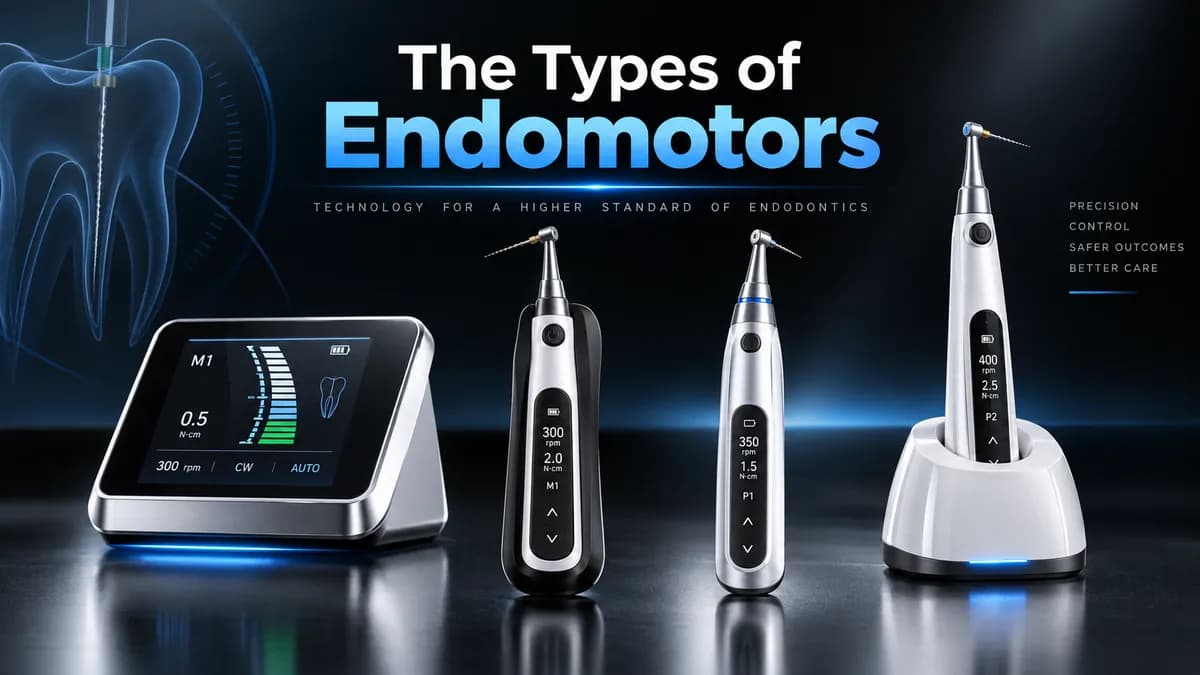
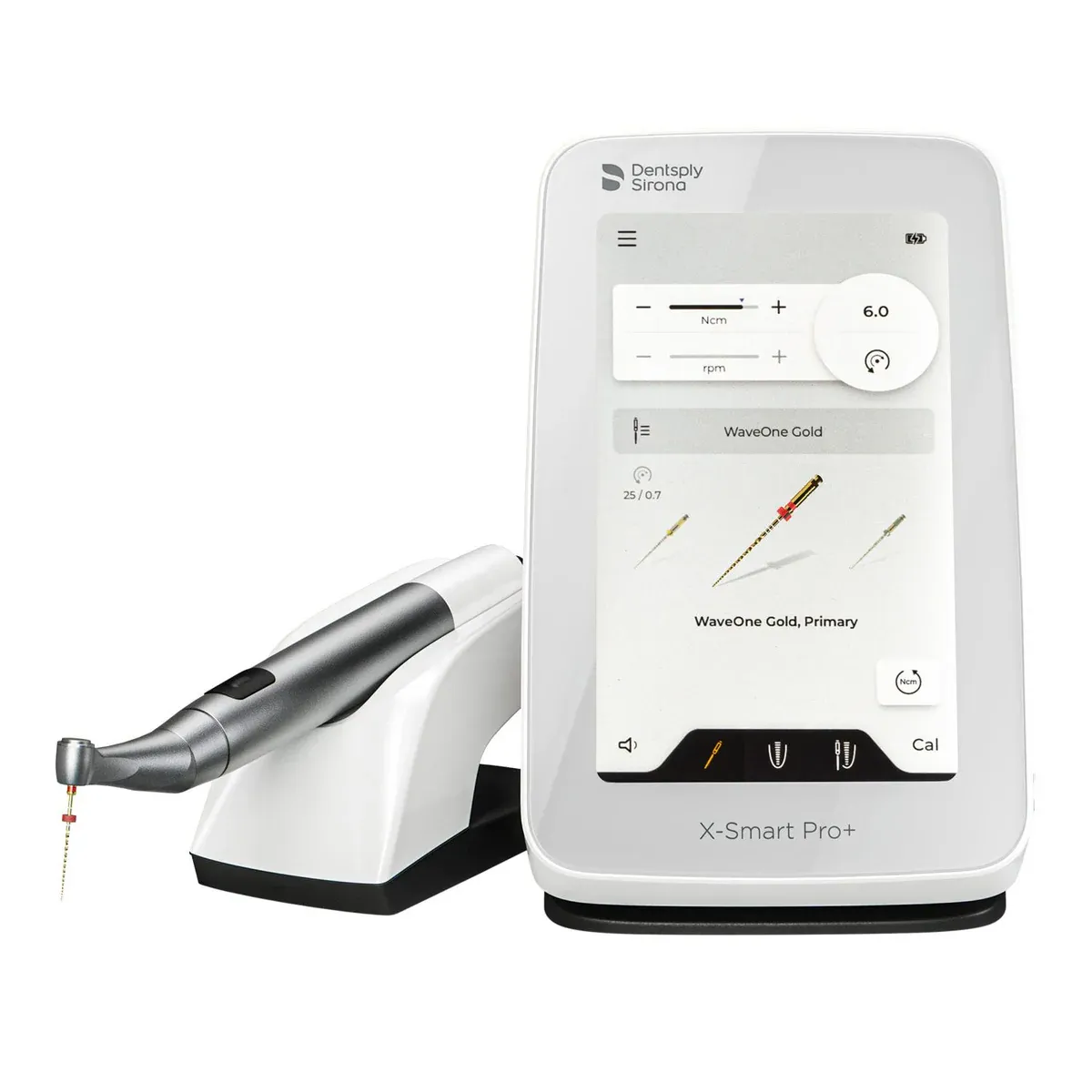
| Woodpecker Ai Motor, Dentsply Sirona X-Smart Pro+, COXO C-Smart range | Endo motors with an integrated locator | Ai Motor: stops or reverses at the set apical point. X-Smart Pro+: rotation, reciprocation and auto-reverse. C-Smart Mini AP: wireless | Shaping at length with one device |
Add spare probe cords (stocked for the I-Root), file clips and small K-files for the measurement.
Buying advice
If you measure with hand files, compare the iPex II, the WOODPEX III and the Endo-Eze Find on the canal conditions each maker tested, the tester and the autoclavable parts. If you are replacing the motor anyway, choose one with an integrated locator. Keep a spare probe cord and file clip, and keep confirming the length on a radiograph.