The problem: four tubes that all say pulp protection
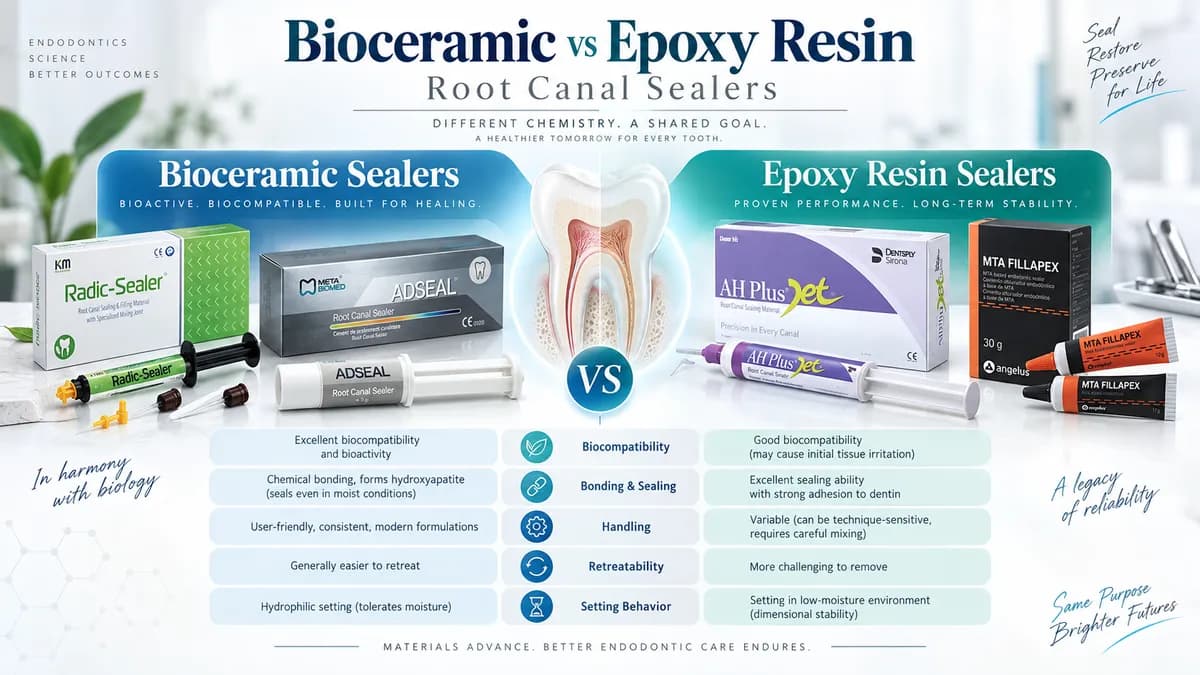
Deep caries removed, a thin floor of dentine left, maybe a pinpoint of pink. On the shelf: a calcium hydroxide paste, a light-cured glass ionomer liner, a bioactive liner in a syringe, and an MTA or Biodentine kit. All say pulp protection. They are not interchangeable: they differ in what they do to the pulp, how well they seal, how strong they are, and what the evidence supports them for. This comparison sorts them by role and by indication, and lists the products we stock in each class.
Understand: liner, base, cap
A liner is a thin layer over dentine close to the pulp. Its job is to seal tubules, reduce sensitivity and, for some materials, encourage reparative dentine. A base is thicker; it replaces lost dentine, insulates and supports the restoration. A pulp cap is placed either directly on exposed pulp tissue (direct cap) or on the last thin layer of affected dentine over it (indirect cap). The material for a direct cap must be biocompatible in contact with pulp tissue, seal against bacteria, and encourage a dentine bridge; the material for a liner under a composite mostly needs to seal and bond.
Calcium hydroxide
The traditional pulp-capping agent. Its high pH kills bacteria and irritates the pulp into forming reparative dentine. Hard-setting two-paste products (Dycal and its equivalents) and light-cured versions are easy to place. The drawbacks: it dissolves over time, the bridge it forms is porous and often has tunnel defects, and it is too weak to support a restoration on its own. It is kept thin and covered.
Resin-modified glass ionomer liners
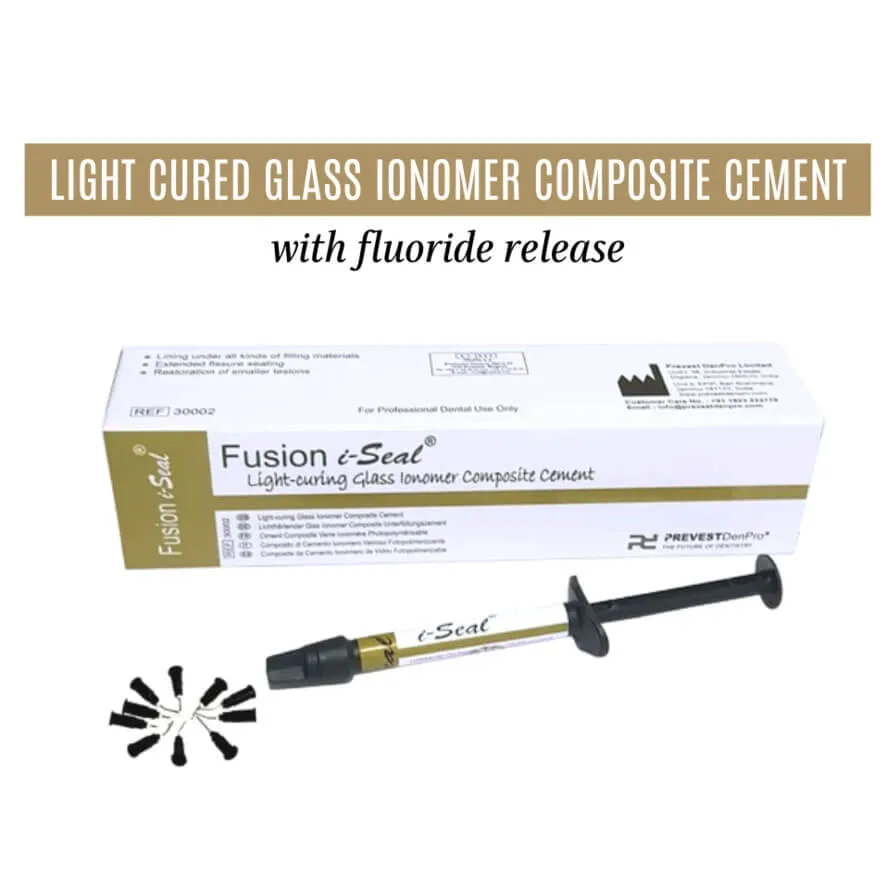
Light-cured glass ionomer in a syringe: bonds to dentine, releases fluoride, seals tubules, and cures in a thin layer with low sensitivity to moisture. This is the routine liner under a composite where dentine is thin or sclerotic. It is not a pulp-capping material on an exposed pulp.
Bioactive resin liners
Light-cured resin liners carrying calcium hydroxide or hydroxyapatite. Convenient, fast and radiopaque; the evidence for their use on exposed pulp is weaker than for calcium-silicate cements, and they are best regarded as liners rather than direct capping agents.
Calcium-silicate cements (MTA, Biodentine and their relatives)
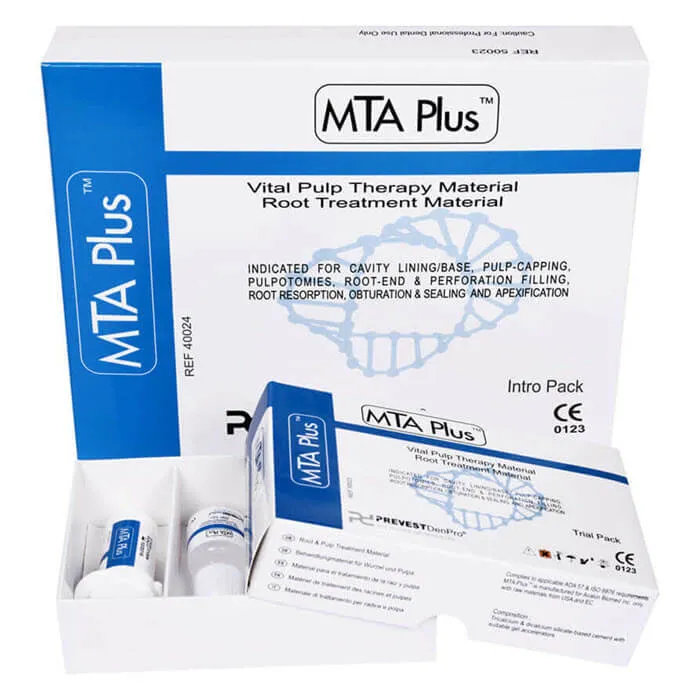
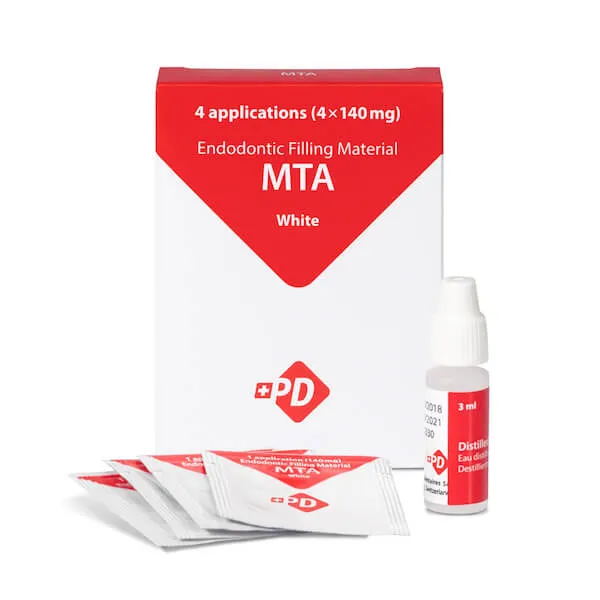
Hydraulic cements that set with water, release calcium hydroxide as they set, and form a dense, well-attached dentine bridge. MTA is the original; grey and white forms differ in discolouration risk. Biodentine is a faster-setting dentine substitute that can be used as a base and even as a temporary restoration. Premixed putties and light-cured MTA-type materials exist. These are the materials the evidence supports for direct pulp capping.
What the evidence says
- Evidence. A network meta-regression of randomised trials found Biodentine and MTA had significantly higher direct pulp-capping success than calcium hydroxide, with Biodentine ranked first and MTA second, while noting low certainty of evidence and heterogeneity between trials.1
- Evidence. Direct comparisons of MTA and Biodentine pooled in a systematic review showed no statistically significant difference in success; individual trials report Biodentine's faster set and lack of discolouration as practical advantages.2
- Evidence. As an indirect pulp-capping agent, a randomised trial comparing Biodentine with light-cured MTA found similar high success at one year.3
- Practice. Under a composite without exposure, most clinicians now use a thin resin-modified glass ionomer liner on the deepest dentine only, and rely on the adhesive elsewhere.
Options: the materials we stock
| Class | Stocked examples | Role |
|---|
| Calcium hydroxide, hard-setting | Dycal Dentin (Dentsply Sirona), Prime-Blend Ultra, Opacal, Cal LC (light-cured, radiopaque) | Indirect pulp capping, thin liner, economical |
| Resin-modified glass ionomer liner | Fusion iSeal LC, Ionoseal, Biner LC, WP Glass Liner | Liner under composite and amalgam; sealing deep dentine |
| Bioactive resin liner | Ultra-Blend Plus, ApaCal Art | Light-cured liner with calcium or hydroxyapatite release |
| Calcium-silicate cement | Biodentine, MTA Plus, RetroMTA, PD MTA White, OrthoMTA | Direct and indirect pulp capping, pulpotomy, perforation repair, root-end filling, apexification |
| Placement instruments | Dycal applicators, single and double ended | Carrying a small amount to the deepest point |
Compare: material by indication
| Indication | First choice | Alternative | Notes |
|---|
| Direct pulp cap, small exposure, healthy pulp, bleeding controlled | Biodentine or MTA | Calcium hydroxide covered by a glass ionomer base | Isolation, haemostasis with sterile saline or sodium hypochlorite, then the cap, then a sealing restoration in the same visit where possible |
| Indirect pulp cap over thin affected dentine | Calcium-silicate cement or calcium hydroxide | Resin-modified glass ionomer liner | Leave the last layer of affected dentine; seal |
| Liner under composite, deep dentine, no exposure | Resin-modified glass ionomer liner | Bioactive resin liner | Thin layer on the deepest dentine only; bond the rest |
| Base replacing lost dentine | Biodentine, or glass ionomer | Core build-up composite | Biodentine can be cut back and bonded over after setting |
| Perforation repair, root-end filling | MTA or a bioceramic putty | Biodentine | Moisture is needed for the set |
| Pulpotomy in a primary molar | MTA or Biodentine | Calcium hydroxide (weaker evidence) | Cover with a stainless steel crown where indicated |
Choose a calcium-silicate cement whenever the pulp is exposed or nearly so. Choose a resin-modified glass ionomer liner for the routine deep composite. Keep calcium hydroxide for indirect caps and where cost is the deciding factor, and always cover it.
Technique notes
- Rubber dam before any exposure is touched; bacteria, not the material, decide the outcome. Ask about latex allergy first and use a non-latex dam when the answer is yes or unknown.
- Control bleeding with a cotton pellet moistened in saline or diluted sodium hypochlorite; if bleeding does not stop within a few minutes, the pulp is inflamed and a cap is the wrong treatment. Sodium hypochlorite burns soft tissue and eyes, so apply it under the dam on a damp, not dripping, pellet and give the patient protective glasses.
- Place calcium-silicate cements in a layer thick enough to set and seal, then a glass ionomer or resin base, then the restoration; Biodentine can be left as the restoration briefly.
- Keep calcium hydroxide thin and at the deepest point; do not spread it over walls you intend to bond.
- Record the material, the exposure size and the pulp status; review vitality at follow-up.
Recommended products
Calcium hydroxide liners and the instrument that places them: